
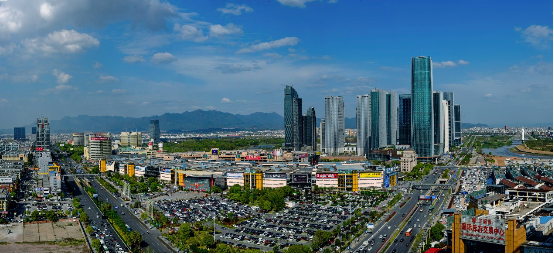
Yiwu's wholesale markets are located in Yiwu, Zhejiang Province, China. The best known is Yiwu International Trade City, also called Futian Market. Its numbered districts specialize in different consumer-product categories. Without a defined shopping list, buyers can easily lose time among thousands of similar stalls.
This guide explains what to find in each district, how to organize a sourcing visit, and what to verify about products and suppliers before placing an order. It is intended for importers, retailers and buyers sourcing from China, in person or remotely.
What are Yiwu's markets?
Yiwu International Trade City is the principal wholesale complex and is widely described as one of the world's largest markets for small commodities. The city also has separate markets, notably Huangyuan Clothing Market and the International Production Materials Market.
Published figures vary, but general references describe approximately four million square meters and nearly 80,000 shops. The precise figures matter less than the practical point: exploring the complex effectively requires a plan.
Yiwu allows buyers to discover products and compare offers in one place. A shop, however, is not necessarily a factory, and a display does not establish production quality or minimum order quantity (MOQ). Evaluate each supplier and product separately.
How many districts are there?
Recent market information describes six districts, including the newer District 6 at the Yiwu Global Digital Trade Center. Older guides may refer to only five. Product locations and floor assignments can change; confirm the building, floor and stall before traveling.
What products are sold in each district?
MarketMain product categoriesBest for District 1Toys, artificial flowers, jewelry, hair accessories, holiday and wedding decorationsGifts, accessories and seasonal goods District 2Bags, luggage, umbrellas, hardware, electrical goods, kitchen and bathroom products, small appliancesTools, household and travel goods District 3Stationery, office and school supplies, eyewear, cosmetics, sports goods, zippers, buttons and garment accessoriesStationery, sports, beauty and clothing accessories District 4Socks, gloves, hats, knitwear, shoes, towels, underwear and scarvesTextiles, clothing basics and daily necessities District 5Imported goods, bedding, pet supplies, curtain fabrics, hotel supplies and automotive accessoriesHome, hospitality, pet and automotive goods District 6Jewelry, trending toys, apparel fabrics, children's goods, home and travel items, selected smart equipmentNew and varied consumer categories Huangyuan MarketMen's, women's and children's ready-made clothingGarments International Production Materials MarketMaterials, fabrics, lighting, machinery and related suppliesManufacturing inputs and equipmentDistrict 1: toys, accessories and gifts
Look for toys, artificial flowers, jewelry, hair accessories, seasonal products and decorations. Toys and artificial flowers are generally found on the first floor; jewelry and headwear on the second; festival, wedding and decorative supplies on the third. Record materials, dimensions, finish, packaging and model differences—not only the displayed price. For regulated goods such as toys, check destination-market requirements before ordering.
District 2: bags, tools and household products
The first floor features bags, luggage and umbrellas; the second covers tools and electrical goods; and the third includes kitchen, bathroom and small-appliance products. Market sources also list new-energy products here. For bags, compare fabric, lining, zippers, stitching and handles. For electrical goods, request precise specifications and required compliance documents. Similar appearance does not guarantee equal performance.
District 3: stationery, sports and cosmetics
Categories include pens, ink, paper, office and school supplies, sporting goods, eyewear, cosmetics, zippers, buttons and garment accessories. Verify stationery dimensions, printing and finish. Cosmetics and products with health claims require particular attention to destination-country rules and documentation.
District 4: socks, textiles and daily goods
Socks are commonly found on the first floor, with gloves, hats, knitwear, footwear, towels and scarves on other floors. Specify fabric composition, sizes, colors, stitching and packaging. If you expect repeat orders, agree how the supplier will maintain consistent specifications and colors between batches.
District 5: bedding, imported and specialized goods
This district covers imported products, bedding, pet supplies, curtain fabric, hotel supplies and automotive accessories. Prepare a precise shopping list. For automotive parts and accessories, document vehicle make, model and production year to avoid compatibility errors.
District 6: newer product categories
Published listings include jewelry, trending toys, apparel fabrics, children's goods, household and travel products and some smart equipment. Because this district is newer, confirm its current floor-by-floor directory before visiting.
Huangyuan Clothing Market
Huangyuan is separate from the numbered districts and specializes in ready-made clothing for men, women and children. It is particularly useful when apparel is your main purchasing category.
International Production Materials Market
This market serves buyers of materials, fabrics, lighting, machinery and manufacturing supplies rather than finished consumer goods intended for retail.
How to plan a Yiwu sourcing visit
A productive visit starts with a purchasing brief, not random browsing:
- List required products. Include reference images, materials, dimensions, intended use, target quantities and destination country.
- Match categories to districts. Verify the building, floor and stall before departure.
- Create a supplier comparison sheet. Record contacts, specifications, price, MOQ, lead time and packaging.
- Separate sample approval from order approval. Document mass-production specifications and acceptance criteria in writing.
- Plan post-purchase operations. Assign responsibility for production, inspection, local transport, consolidation and export formalities.
Allow time to travel between districts; taxis or bicycles may be needed. Confirm opening dates, particularly around the Chinese Spring Festival, when markets usually close.
Chinagoods describes itself as Yiwu Market's official online platform. It can help with preliminary category and shop research, but online listings do not replace commercial due diligence.
What to verify before placing an order
Supplier identity and contracting entity
Having a stall does not prove the seller owns a factory. Identify the legal contracting company, the manufacturer and the payment recipient. Check that quotations and purchase documents match the entity you negotiated with. Request a business license and verify it through official Chinese channels or an independent specialist when the order warrants it.
Product specifications and MOQ
There is no single MOQ for all Yiwu products. Minimums depend on the supplier, item, inventory, customization and packaging. Ask for the minimum by model, color, size, logo and packaging option.
A quotation should specify at least:
- Product model and specifications
- Unit price and currency
- MOQ and units per carton
- Sample price and preparation time
- Production lead time and quotation validity
- Packaging, labeling and customization
- Delivery point and agreed Incoterms, such as EXW or FOB, where applicable
Samples and quality standards
Compare samples with written specifications. Agree on inspection methods and remedies for nonconforming goods. A sample displayed in a shop does not automatically guarantee that later bulk production will match it.
Destination-market requirements
Requirements vary by product and importing country and may cover safety, labeling, materials, electrical characteristics or cosmetic ingredients. Consult the relevant customs or regulatory authority for your specific product; no general guide can certify compliance in every market.
Buying remotely from Yiwu
Online catalogs and supplier communication make remote sourcing possible, but written specifications and verification become even more important. Request recent product photos and videos, confirm supplier identity and payment terms, and arrange samples or independent inspection when justified by the order's value or risk. Do not pay the full amount upfront without verifying the payee and written payment terms.
When purchasing from several suppliers, coordinate arrival dates, carton information and shipping. Consolidating purchases into one shipment can reduce freight costs.
Common mistakes when buying from Yiwu
- Visiting without a route tied to your product list
- Assuming every stall is a manufacturer
- Comparing prices without comparing materials, packaging and terms
- Assuming a fixed MOQ for every item
- Relying on verbal agreements instead of written purchase documents
- Using outdated market maps without checking current locations
Frequently asked questions
What is the main Yiwu market called?
Yiwu International Trade City, also known as Futian Market or Yiwu International Trade Market.
How many districts does Yiwu Market have?
Recent listings describe six districts, while older guides mention five. Verify current listings for the categories you plan to visit.
What can I buy in Yiwu?
Toys, jewelry, stationery, bags, tools, textiles, socks, bedding, pet supplies, car accessories and many other categories, depending on the district.
Is Huangyuan part of the numbered districts?
No. It is a separate market specializing in clothing.
Is there a standard MOQ in Yiwu?
No. Minimums vary by supplier, product, model, customization and packaging. Confirm each line item before accepting a quote.
Are market listings enough to verify a supplier?
No. They help identify products and shop locations but do not replace checks of the contracting company, factory, terms and documents.
Can I buy from Yiwu without traveling?
Yes, through online listings, direct supplier contact or an intermediary, provided specifications are documented and samples or inspections arranged when needed.
Conclusion
Yiwu provides access to a wide range of products and suppliers in one place. Make the most of it by matching products to districts, recording supplier comparisons, verifying the contracting entity and MOQ, and putting every agreement in writing before payment or shipping.
Need help sourcing from China?
If Yiwu is on your shortlist, prepare a buying brief with product images, specifications, quantities and destination country. NAFEIZ provides sourcing, logistics and supply-chain services connecting China with Arab markets. Explore our website and contact us to discuss your requirements.